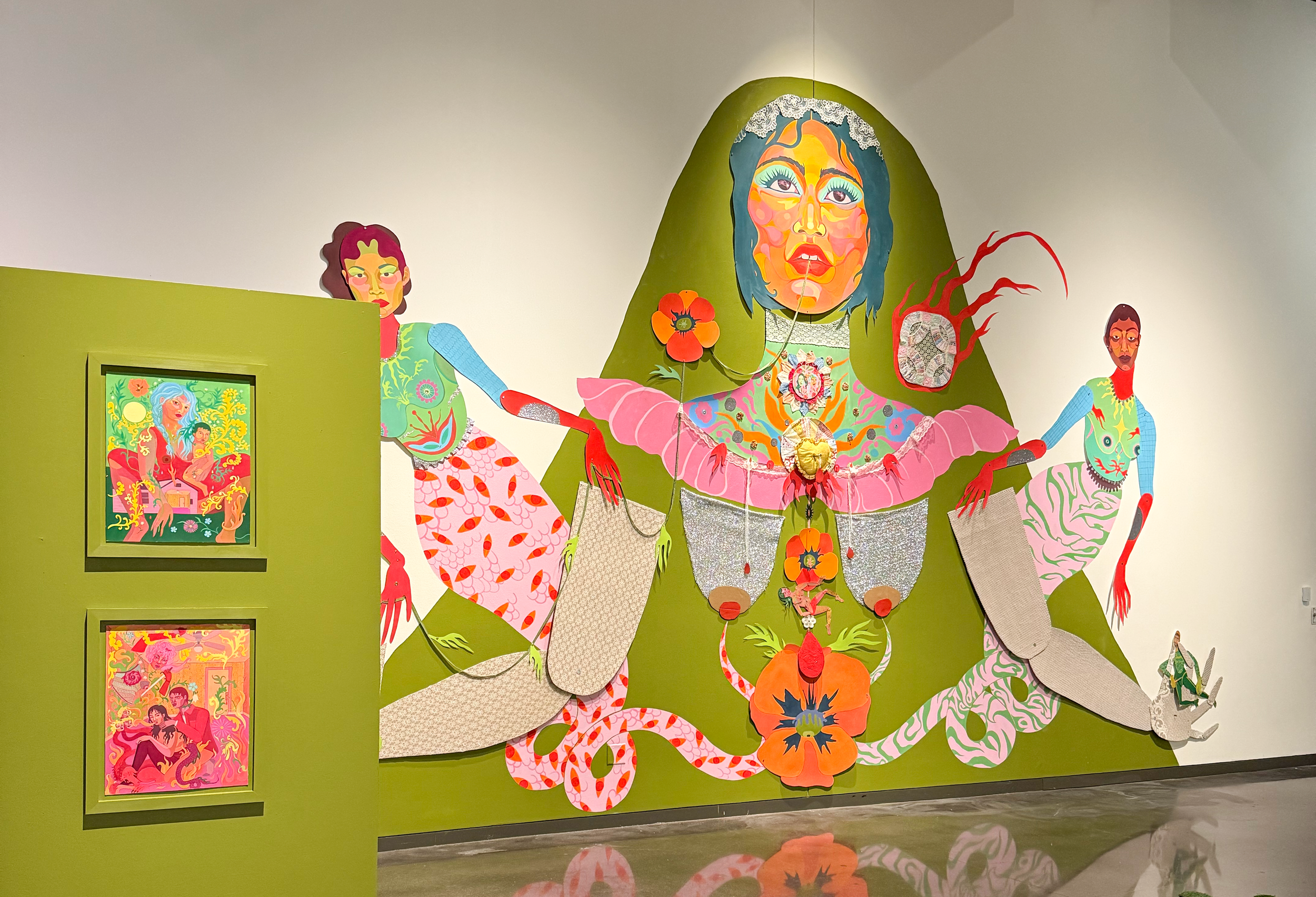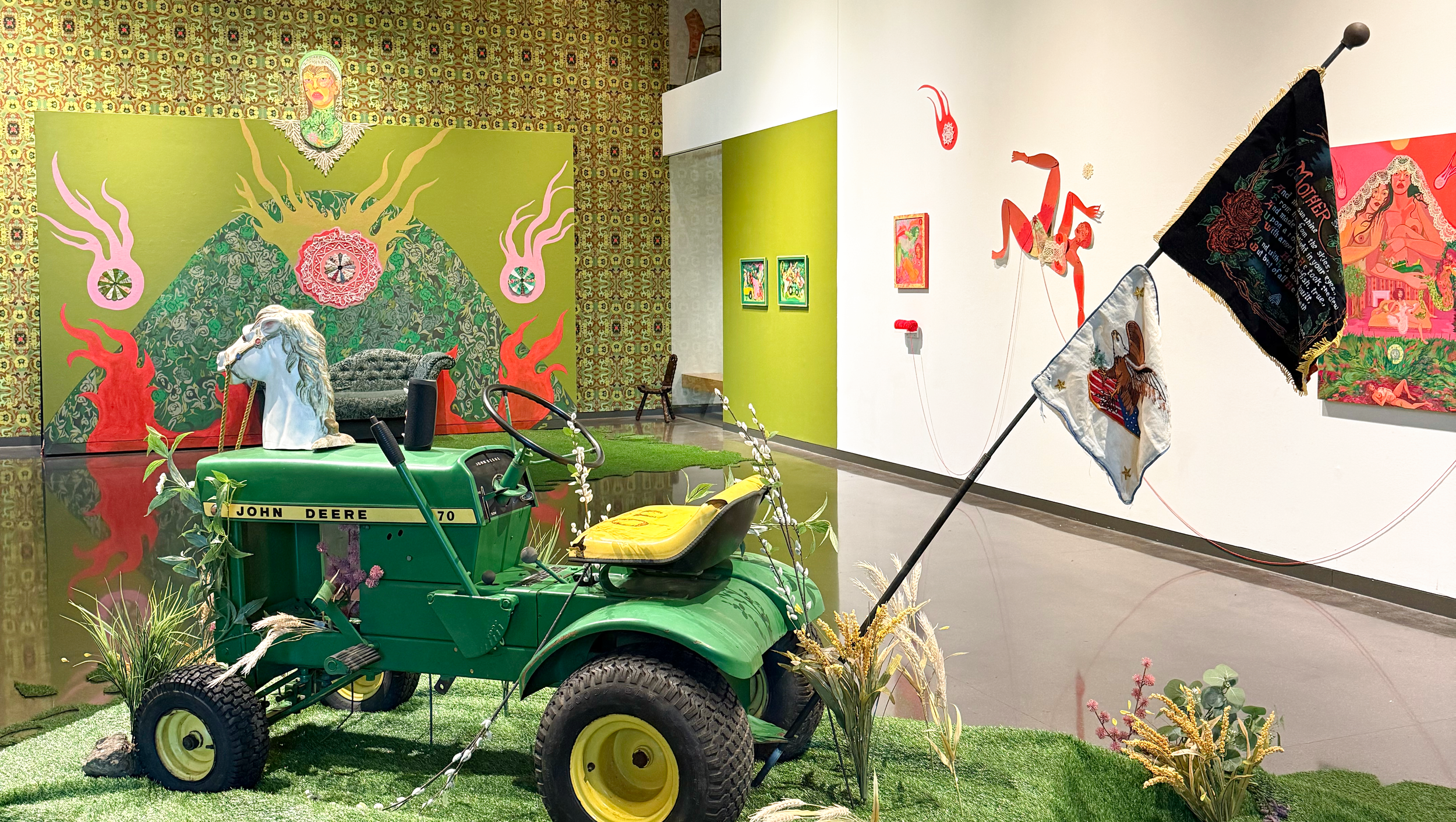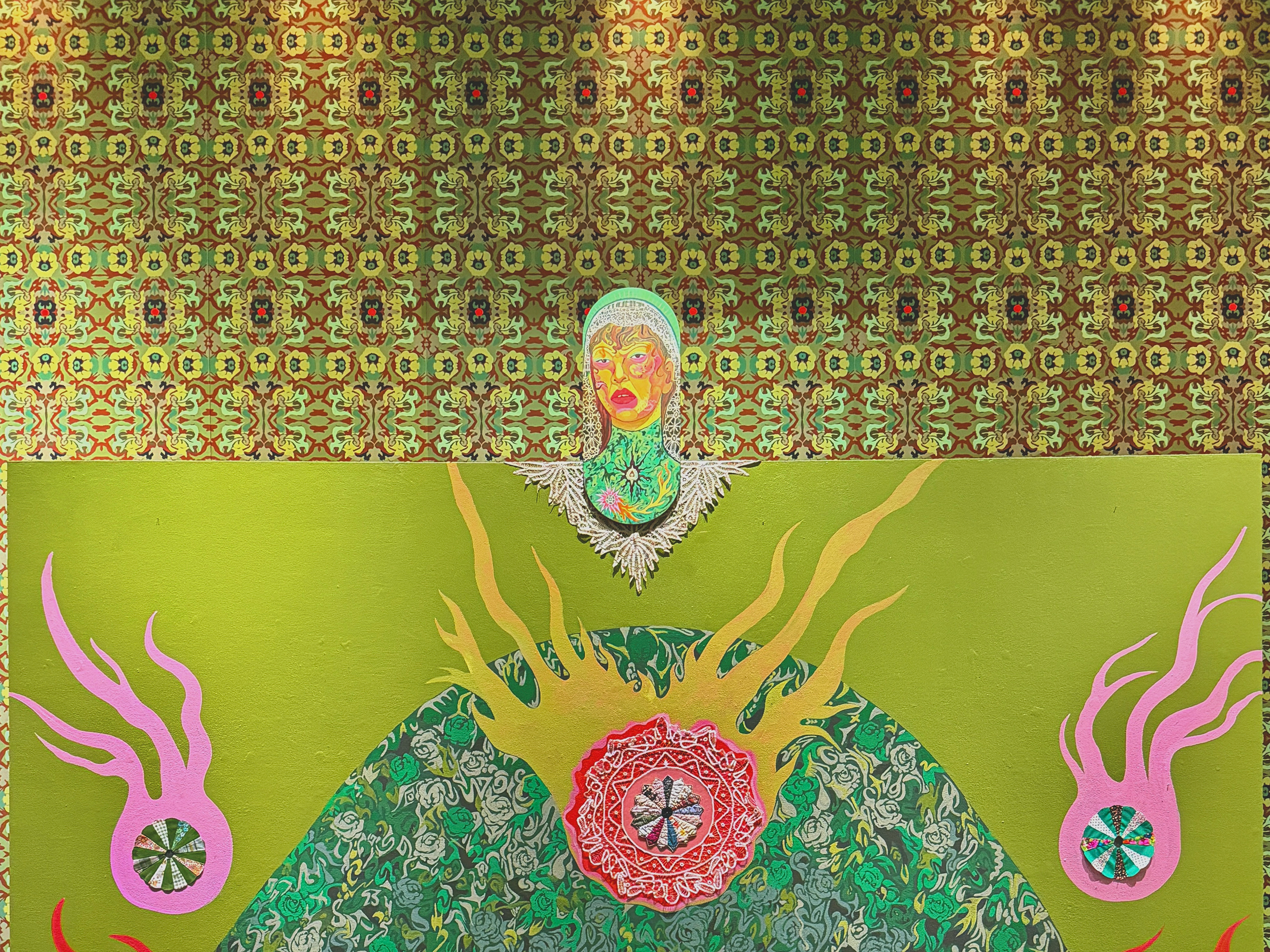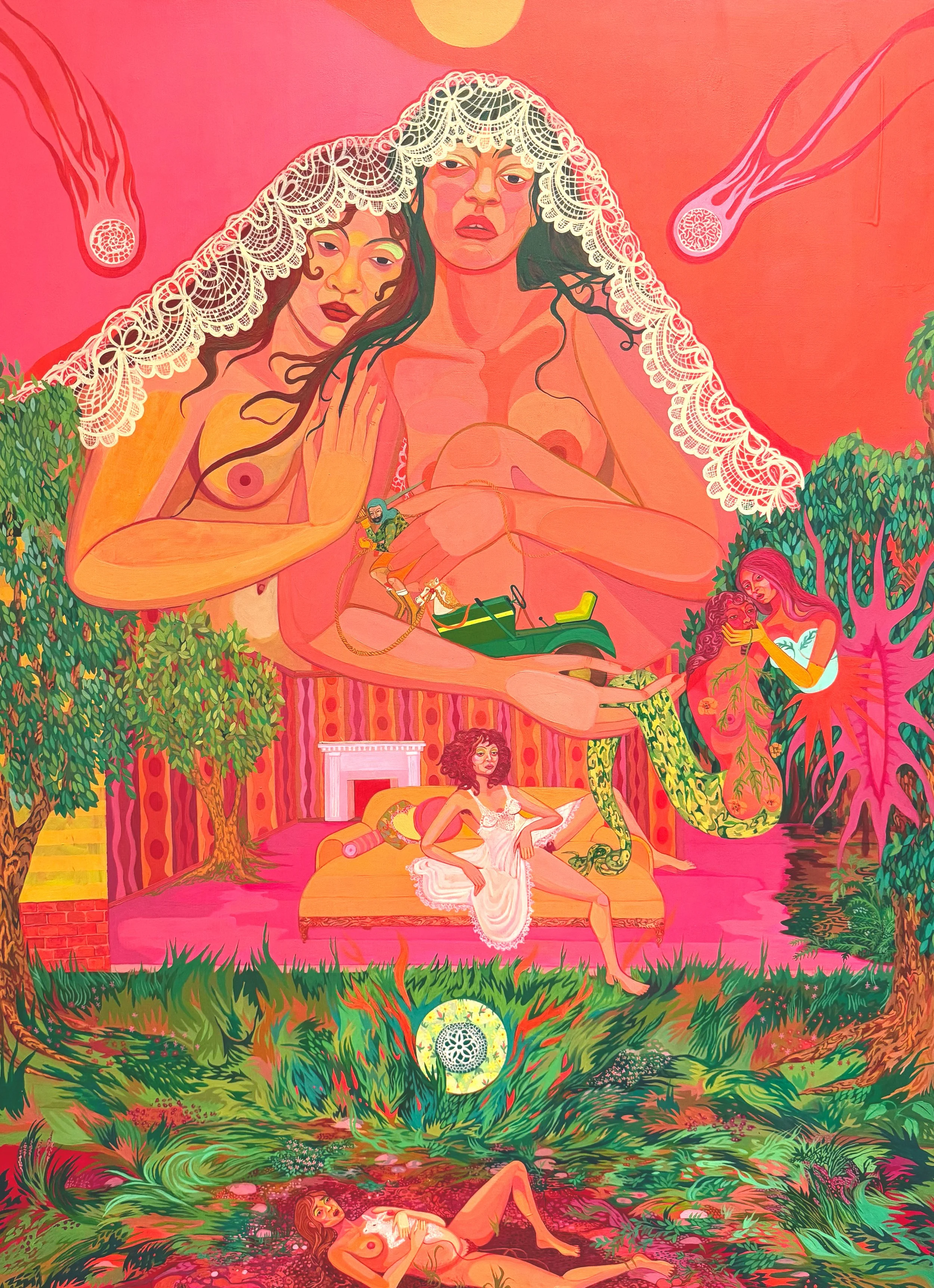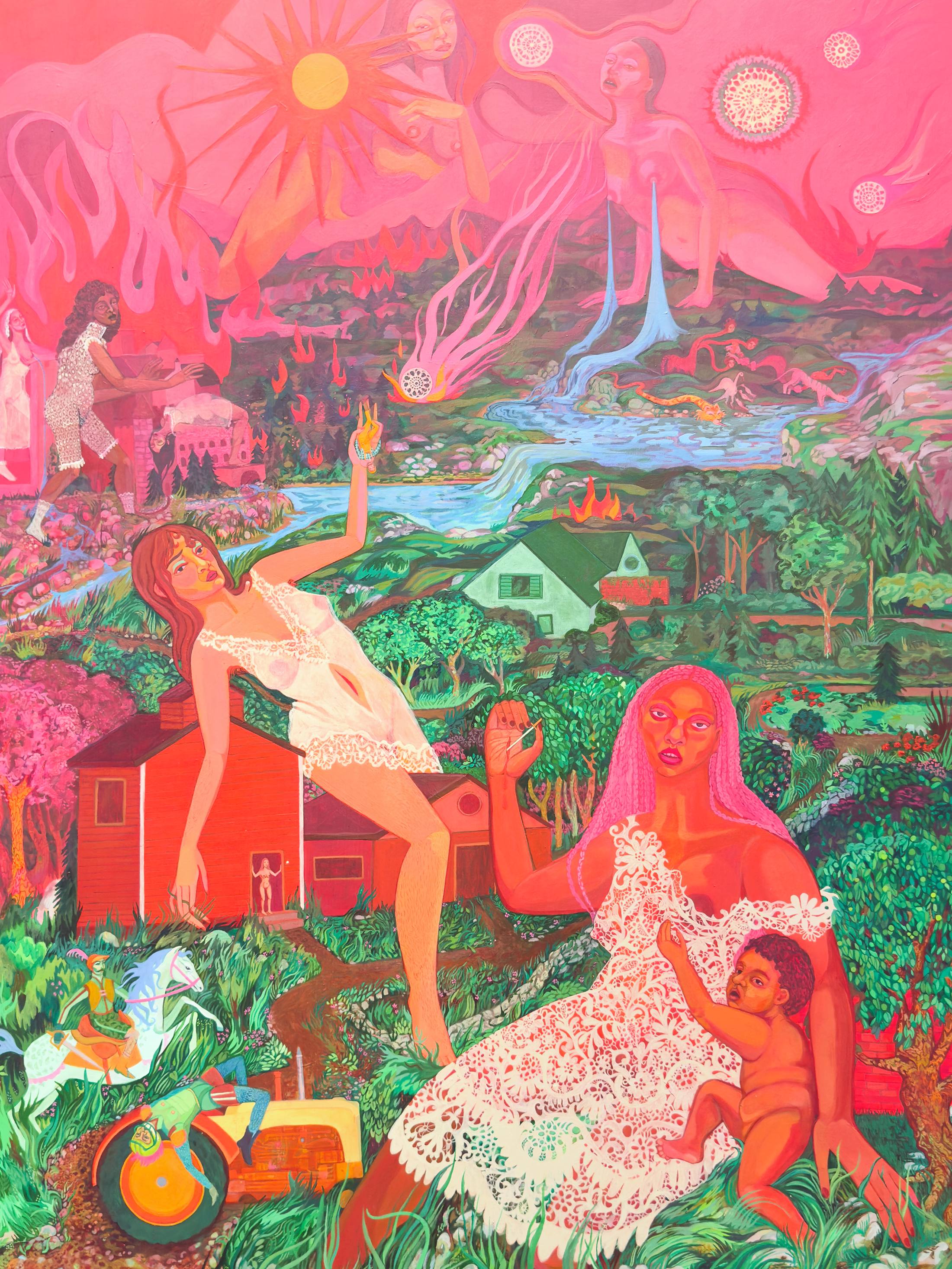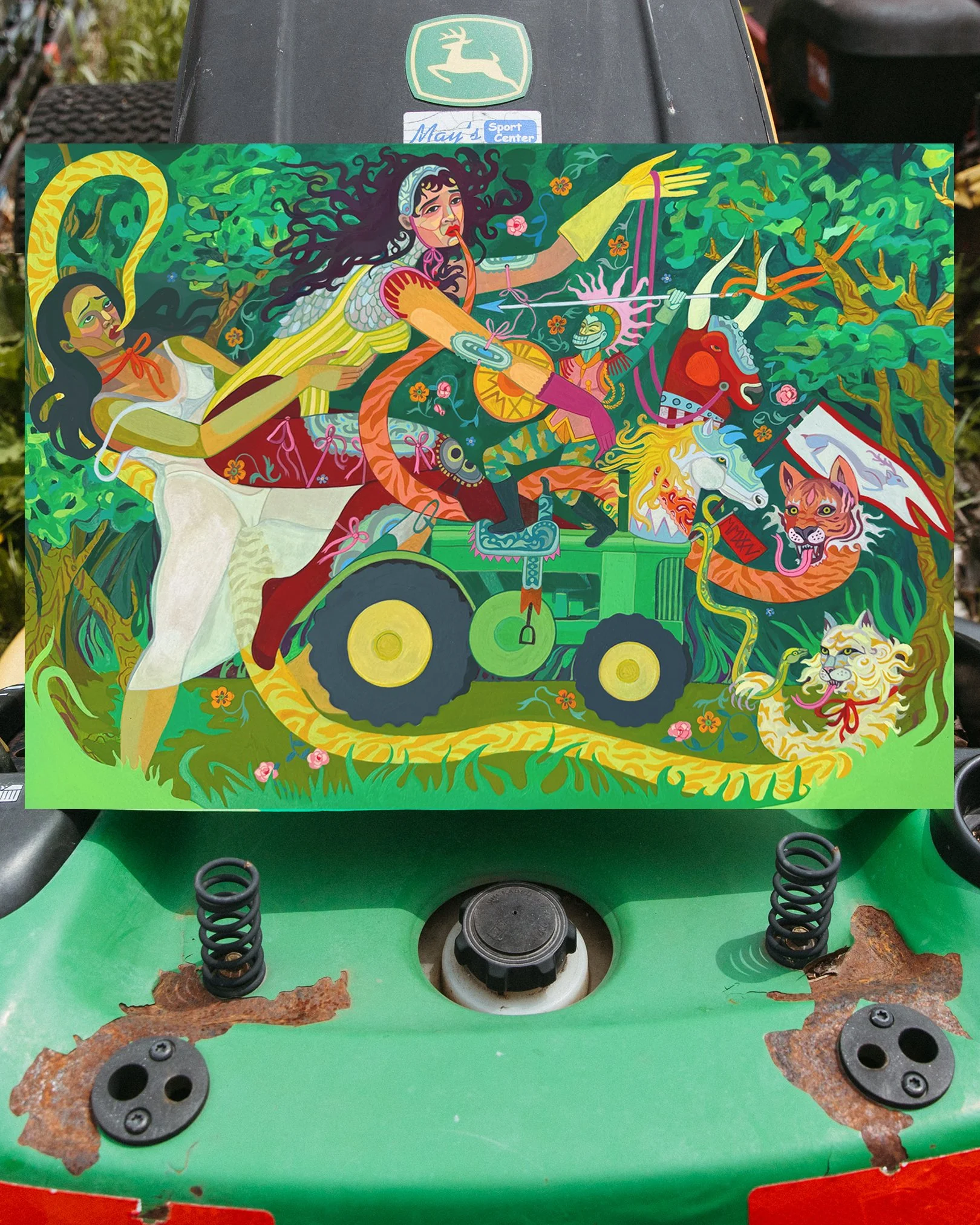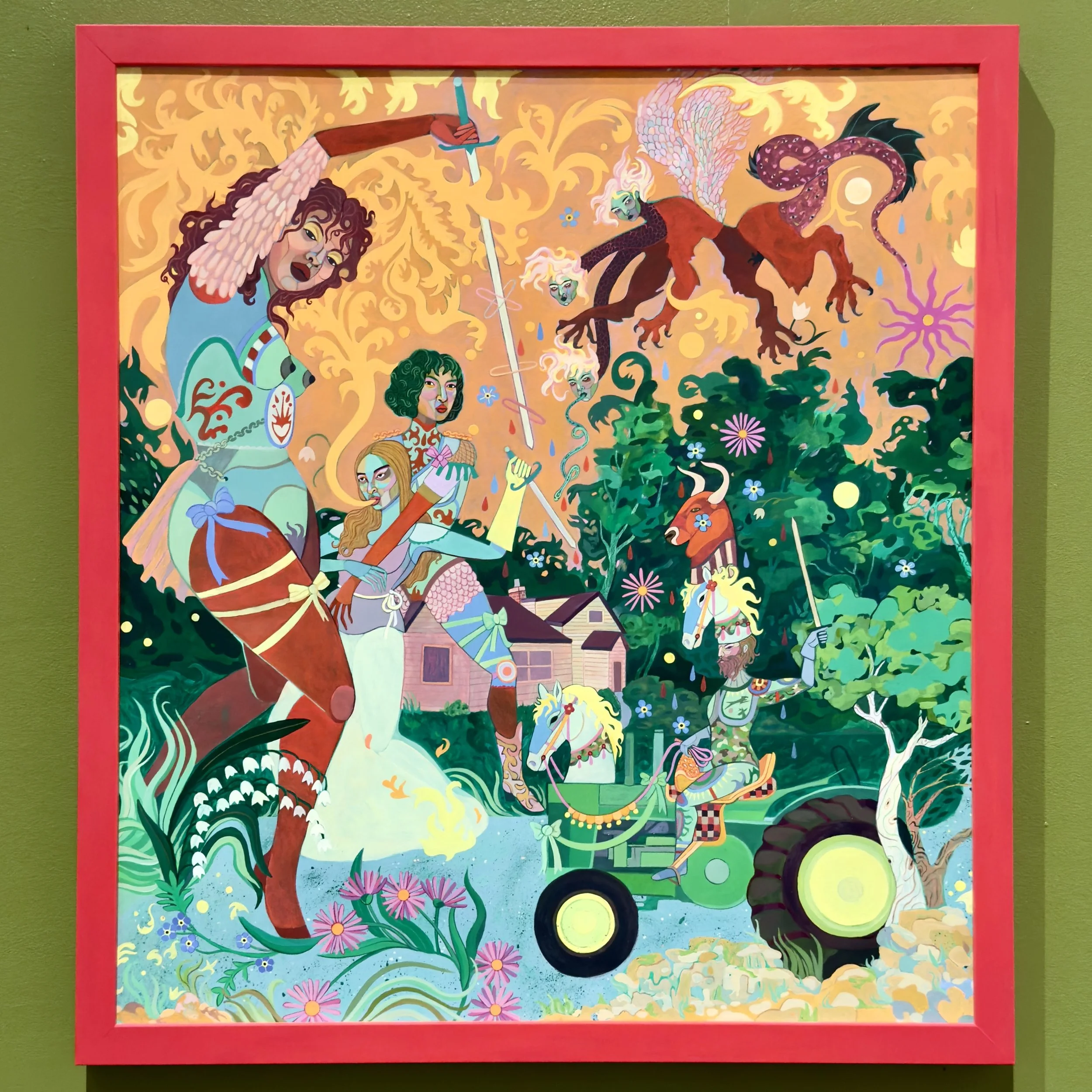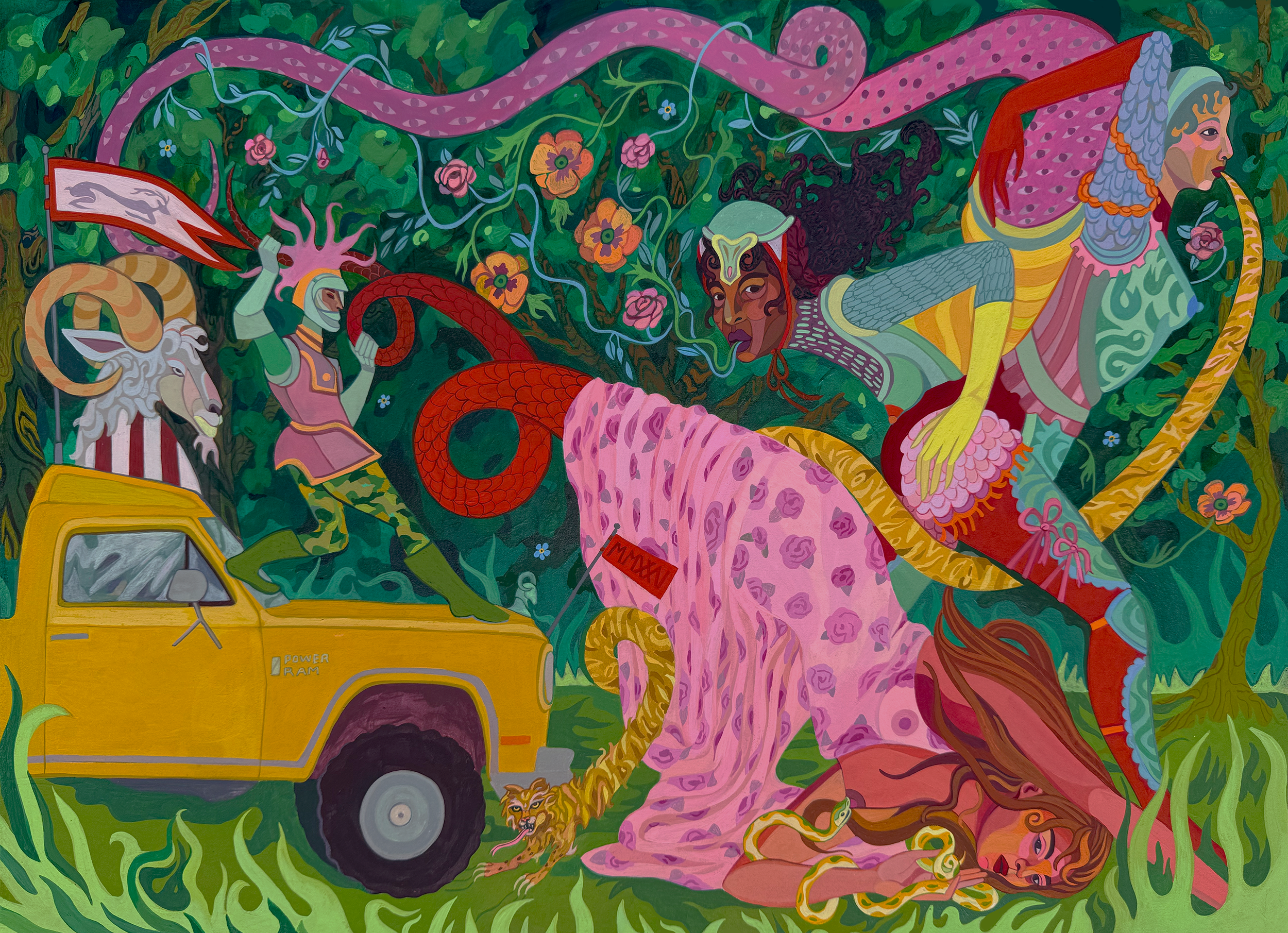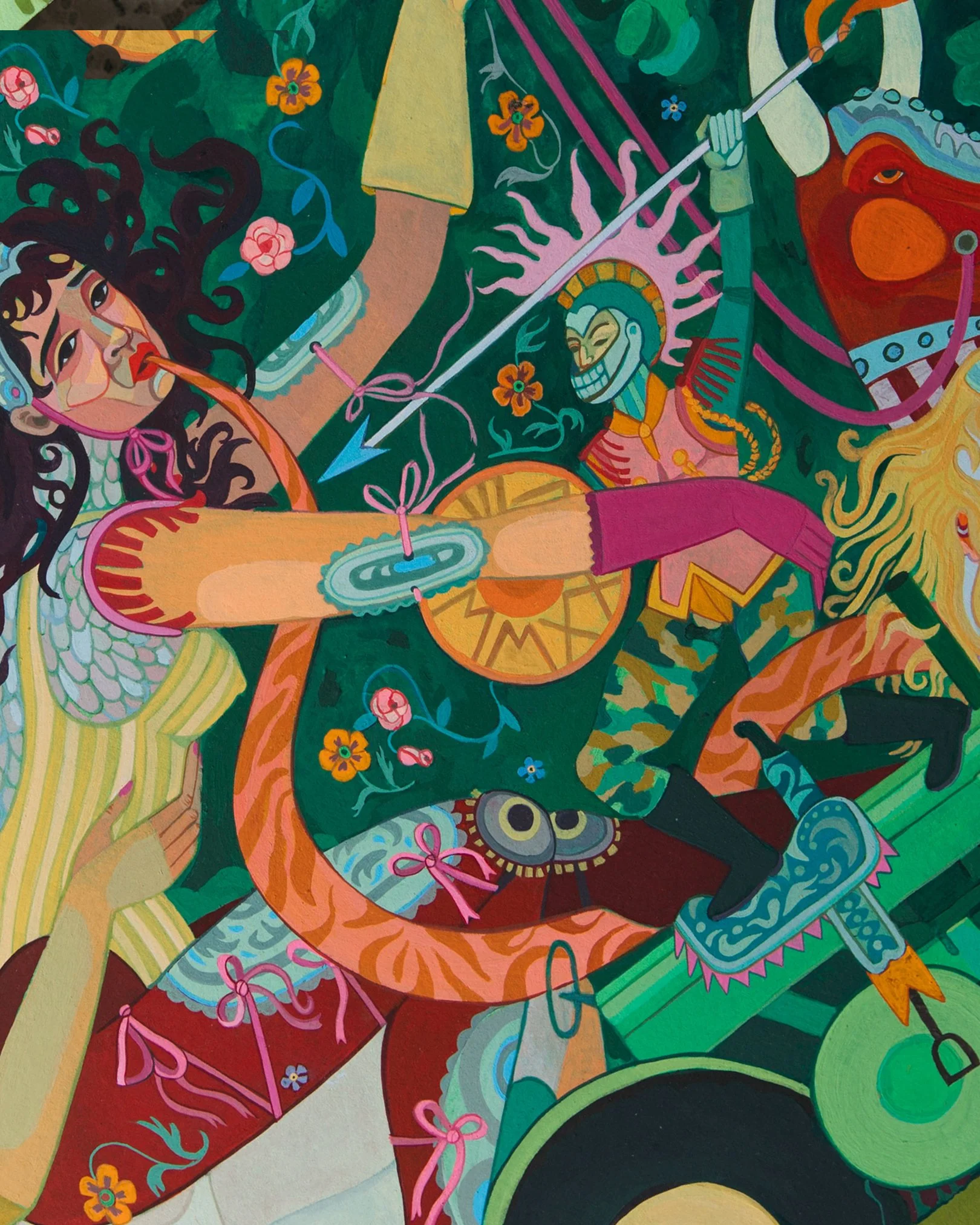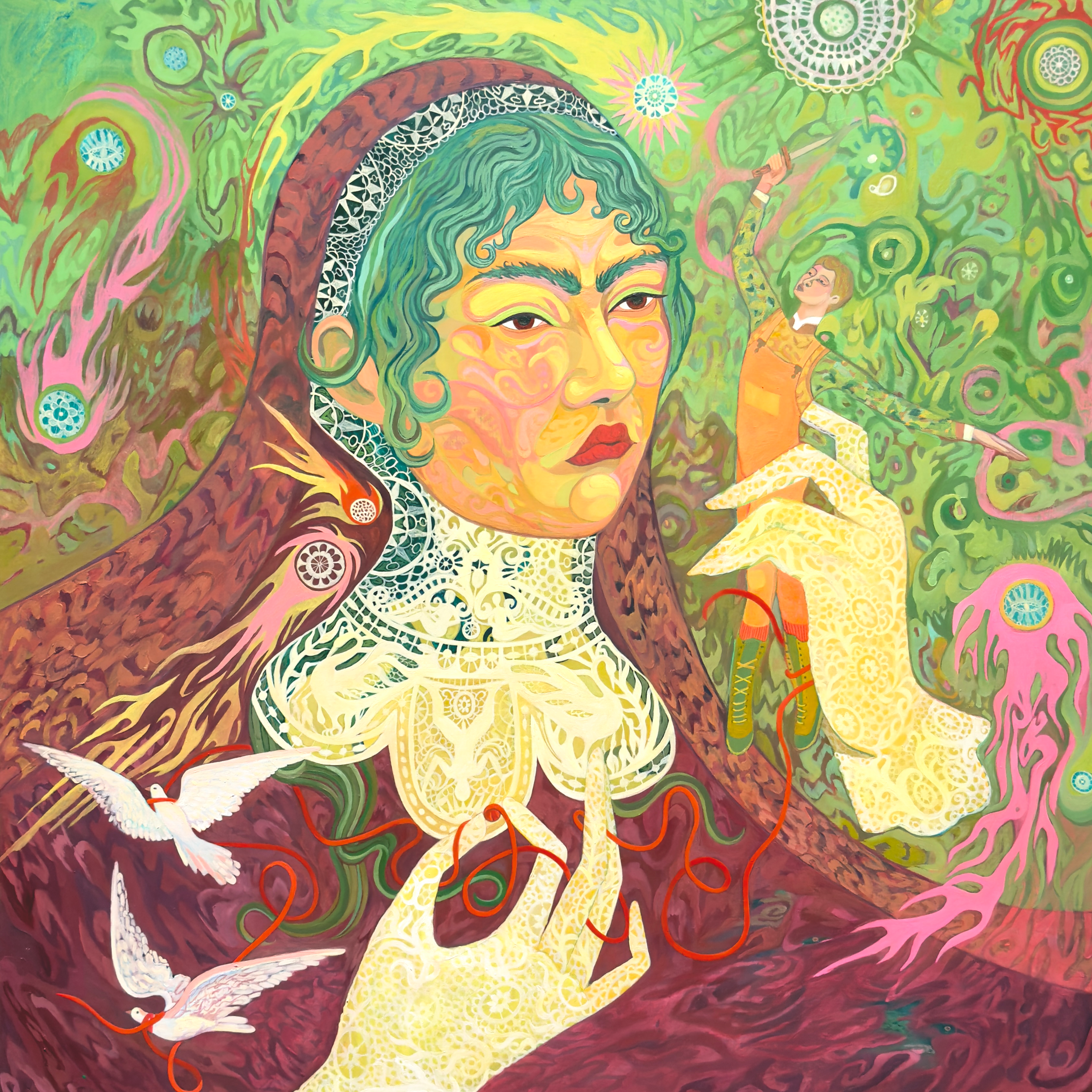
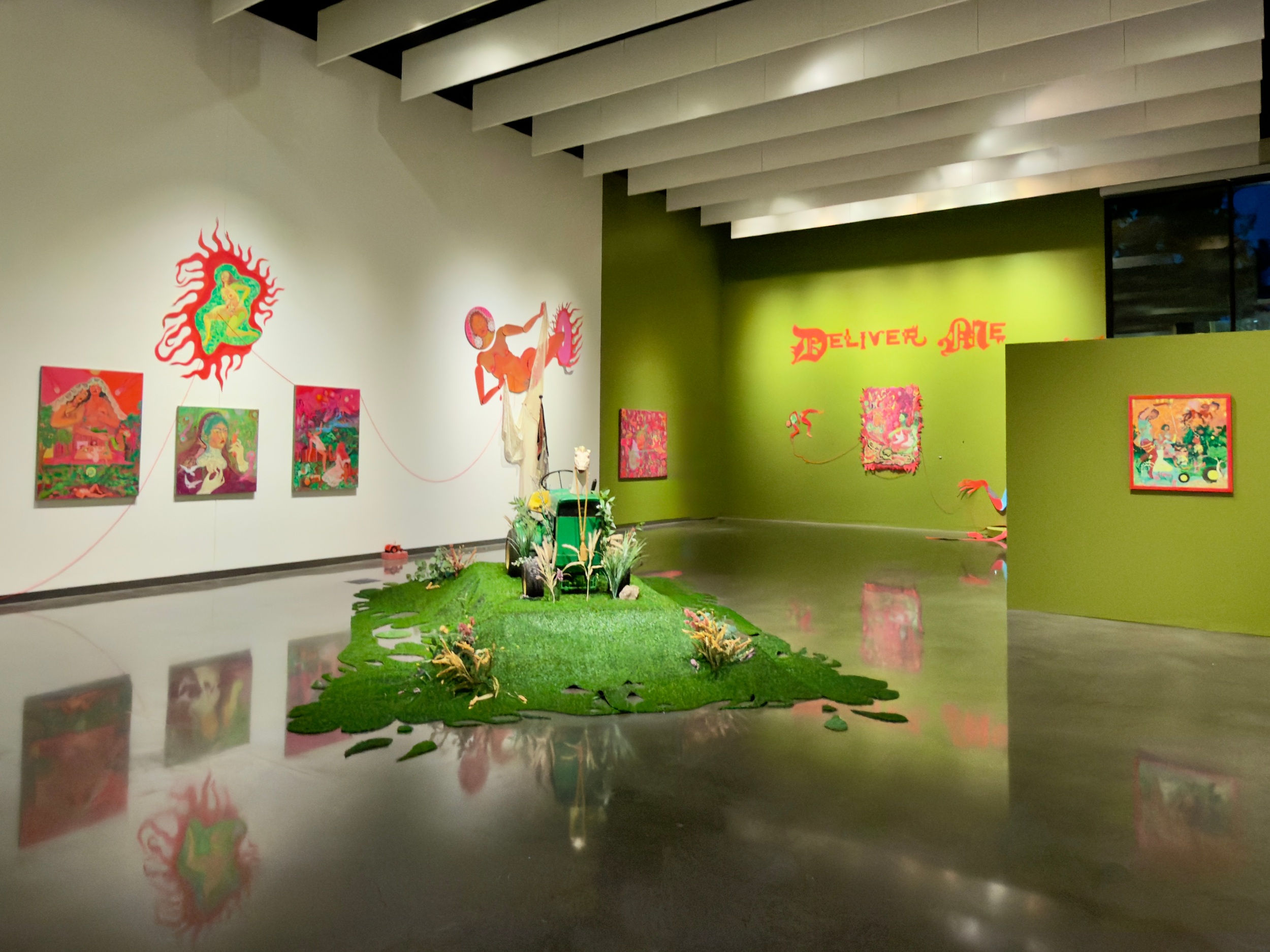
In Deliver Me, Murphy expands the mythology of Manica Deprica through the lens of matrescence—the profound transformation of becoming a mother. Drawing inspiration from medieval devotional imagery, Celtic charms, folk Catholicism, and feminist worldbuilding, the paintings imagine bodies that exceed the structures meant to contain them. Giants emerge from portals, carry children across apocalyptic landscapes, and move through fields, churches, highways, and small towns while searching for safety, refuge, and one another.

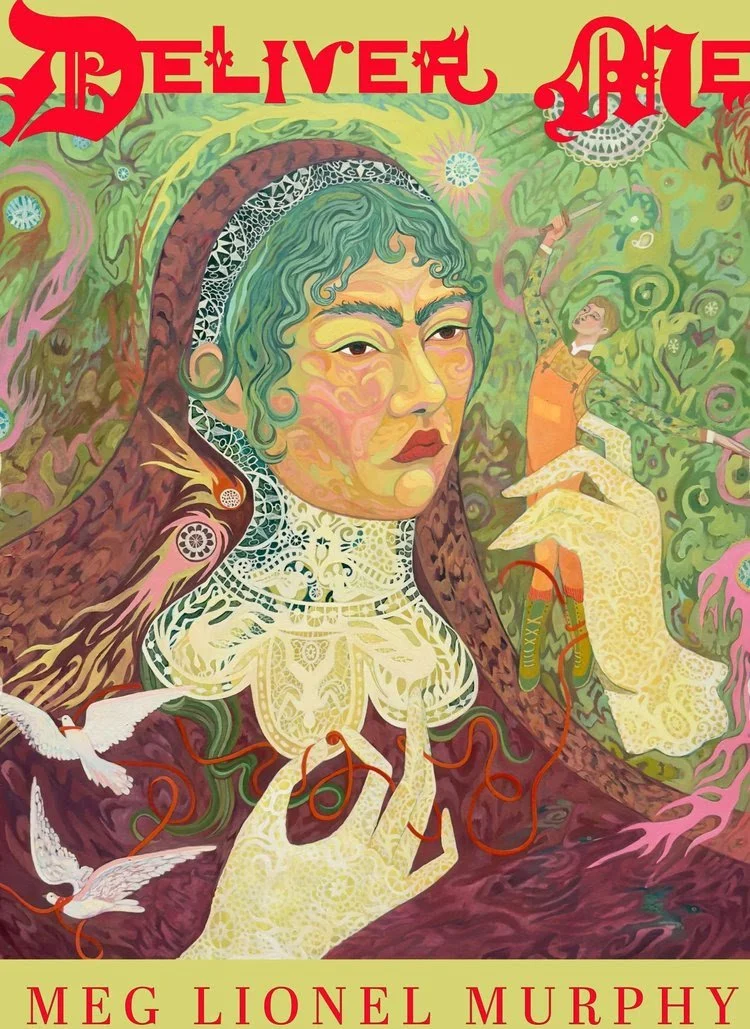
Throughout the exhibition, painting becomes an act of protection. Murphy adapts the Lorica tradition—protective prayers that move deliberately across the body—as a framework for bodily reclamation, rendering each figure as wounded but also as witness. The works function as contemporary altarpieces, talismans, and monuments to endurance, inviting viewers to contemplate the care needs of vulnerable bodies amid personal and political upheaval. As White Christian Nationalism seeks to revive nostalgic hierarchies through the language of family, religion, and tradition, Deliver Me turns to fantasy as a form of resistance. Echoing Ursula K. Le Guin's assertion that “Fantasy is escapist, and that is its glory,” the exhibition imagines escape not as withdrawal but as refusal—an insistence on futures rooted in care, interdependence, transformation, and liberation.